Is Sleeping in a Recliner Bad for Your Heart? – Expert Health Insights
Key Takeaways
- Sleeping in a recliner is not bad for your heart for most people — and may even offer benefits for those with circulation or breathing issues.
- It can help reduce acid reflux, sleep apnea, and heart failure symptoms by promoting better upper-body elevation.
- However, long-term nightly sleeping in a recliner may cause stiffness, muscle imbalance, or poor circulation if posture isn’t supported properly.
- The key is to use your recliner the right way — with proper back support and moderate recline angles.
Sleeping in a recliner is generally safe for your heart and can even help people with heart failure, sleep apnea, or acid reflux by improving breathing and circulation. However, sleeping long-term in a recliner without proper lumbar support may lead to muscle stiffness or restricted blood flow.
Introduction
It’s 11:30 p.m. You’ve just settled into your recliner after a long day, the TV hums quietly in the background… and before you know it, you’ve drifted off to sleep.
The next morning, you wake up wondering:
“Was that bad for me — especially my heart?”
You’re not alone. Many recliner owners find their chairs so comfortable that naps turn into full nights of sleep. The good news? For most people, sleeping in a recliner isn’t just harmless — it can actually be beneficial for your heart and breathing when done correctly.
In this expert-backed guide, we’ll explore what science and doctors say about sleeping in a reclined position, its effects on heart health, and how to do it safely.
The Science Behind Sleeping in a Recliner
When you lie flat, gravity can make it harder for some people to breathe, digest, or circulate blood efficiently — especially if they have heart or lung conditions.
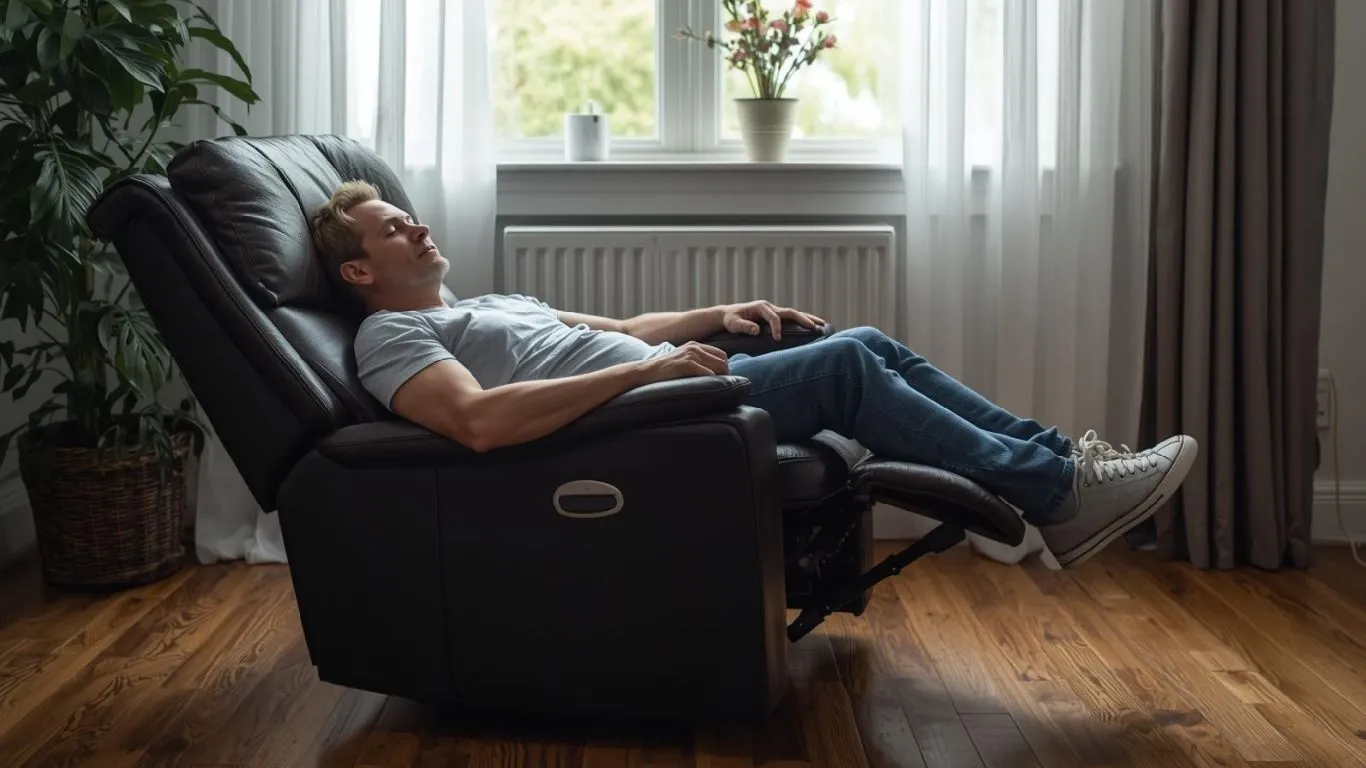
Sleeping in a recliner slightly elevates your head, chest, and legs, which improves:
- Blood circulation to the heart
- Oxygen flow throughout the body
- Pressure relief on the spine and diaphragm
This position, often called the “zero-gravity position,” was originally developed by NASA to relieve pressure on astronauts’ bodies — and it’s now a key feature in many modern recliners.
Pro Tip: The “zero-gravity” angle (about 120–130° recline) is ideal for resting your heart and reducing body strain.
Is Sleeping in a Recliner Bad for Your Heart?
In most cases — no, it’s not bad for your heart. In fact, sleeping in a recliner can help certain individuals manage heart-related symptoms.
Here’s Why:
1. Improved Circulation
A slight recline helps your heart pump blood more efficiently by reducing pressure on your chest and allowing veins to return blood to the heart more easily.
This can be especially helpful for those with:
- Congestive Heart Failure (CHF)
- High blood pressure
- Edema (leg swelling)
2. Reduced Fluid Build-Up
People with heart failure sometimes experience fluid pooling in the lungs or legs when lying flat. A reclined position helps prevent fluid retention, making breathing easier and reducing nighttime coughing or discomfort.
3. Better Breathing for the Heart
A semi-upright reclined position keeps the airways open, reducing snoring and sleep apnea — two conditions that can strain the heart over time.
When Sleeping in a Recliner May Help Heart Health
| Condition | Recliner Benefit |
|---|---|
| Congestive Heart Failure (CHF) | Reduces fluid buildup in lungs and legs |
| Sleep Apnea | Improves airflow and oxygen intake |
| GERD / Acid Reflux | Prevents acid from rising during sleep |
| High Blood Pressure | Eases circulation and reduces strain |
| Post-Surgery Recovery | Encourages healing and comfort through supported elevation |
Pro Tip: If your doctor recommends sleeping with your upper body elevated, a recliner can provide that incline more comfortably than stacked pillows.
When Sleeping in a Recliner Might Be Problematic
While occasional or health-related recliner sleeping is safe, using it as your primary bed every night may cause long-term side effects.
1. Muscle and Joint Stiffness
Prolonged sitting or sleeping in a semi-upright position can shorten hip flexors and lead to stiffness in the neck, shoulders, or lower back.
2. Circulation Issues
If your recliner doesn’t elevate your legs properly, you may experience reduced blood flow or mild swelling in the feet and calves.
3. Poor Posture Over Time
Sleeping in a recliner that lacks lumbar support can cause slouching or strain the spine — which may, ironically, affect circulation efficiency.
Pro Tip: Choose a recliner that supports your lower back and allows your knees to remain slightly above your hips when reclined.
How To Sleep Safely in a Recliner
If you enjoy dozing off in your recliner — or need to sleep in one for medical reasons — here’s how to do it the right way:
1. Choose the Right Angle
Aim for a semi-reclined position (between 120°–130°).
Too upright restricts breathing; too flat increases strain on the lower back.
2. Support Your Neck and Lower Back
Use a small lumbar cushion or rolled towel behind your lower back.
Add a soft pillow behind your neck to maintain alignment.
3. Elevate Your Legs
If your recliner doesn’t lift your feet high enough, use a small ottoman or cushion to slightly raise your legs. This reduces swelling and improves circulation.
4. Use a Lightweight Blanket
Heavy blankets can trap heat and restrict movement, making breathing harder. Choose a breathable throw or comforter instead.
5. Stand Up and Stretch in the Morning
Gently stretch your arms, back, and legs to prevent stiffness. This keeps circulation healthy and muscles relaxed.
Medical Perspective: When To Talk To Your Doctor
If you have heart disease, chronic swelling, or breathing problems, always consult your physician before making recliner sleeping a habit.
Doctors may recommend recliner sleep temporarily for:
- Post-surgery recovery
- Severe acid reflux
- Sleep apnea management
- Chronic heart failure
However, if you experience chest tightness, leg swelling, or tingling, stop recliner sleeping until cleared by a healthcare provider.
Soft Persuasive Insight
For many people, a recliner isn’t just a chair — it’s a comfort zone, a recovery space, and sometimes, the best spot for a full night’s rest.
Sleeping in a recliner isn’t bad for your heart; it’s about how you do it.
With the right recliner — one that supports your posture, promotes circulation, and lets you rest at the perfect angle — you can turn comfort into a healthy habit.
So if you love your recliner naps? Don’t feel guilty — just make them smarter.
Frequently Asked Questions
For most people, no. Sleeping in a recliner can actually reduce heart strain by improving circulation and easing fluid buildup, especially for those with heart failure or high blood pressure.
Yes. Sleeping upright helps prevent fluid accumulation in the lungs and improves breathing — a common recommendation for people with congestive heart failure (CHF).
If your recliner doesn’t elevate your legs, blood can pool in your lower limbs. Choosing a zero-gravity recliner or adding leg support helps maintain proper circulation.
Occasionally, yes — but long-term nightly recliner sleeping can cause stiffness or poor posture. It’s best used as a supplement, not a full-time replacement for a bed.
Yes. Power recliners let you fine-tune the angle for ideal comfort and support, reducing back and leg strain during sleep.
Yes — slightly upright reclined positions open the airways, reducing snoring and sleep interruptions linked to mild sleep apnea.
A semi-reclined position (around 120–130°) with proper back and neck support is safest for your spine, heart, and circulation.
In many short-term cases, yes. A supportive recliner can mimic the elevated angle of a hospital bed and provide comfort for post-surgery or cardiac recovery.
Summary
Sleeping in a recliner isn’t bad for your heart — in fact, it can offer relief for people with heart or breathing issues.
The key is balance: use proper angles, posture support, and circulation-friendly positioning.
Whether it’s for comfort, health, or recovery, the right recliner can help you rest easier and breathe better — one relaxing night at a time.