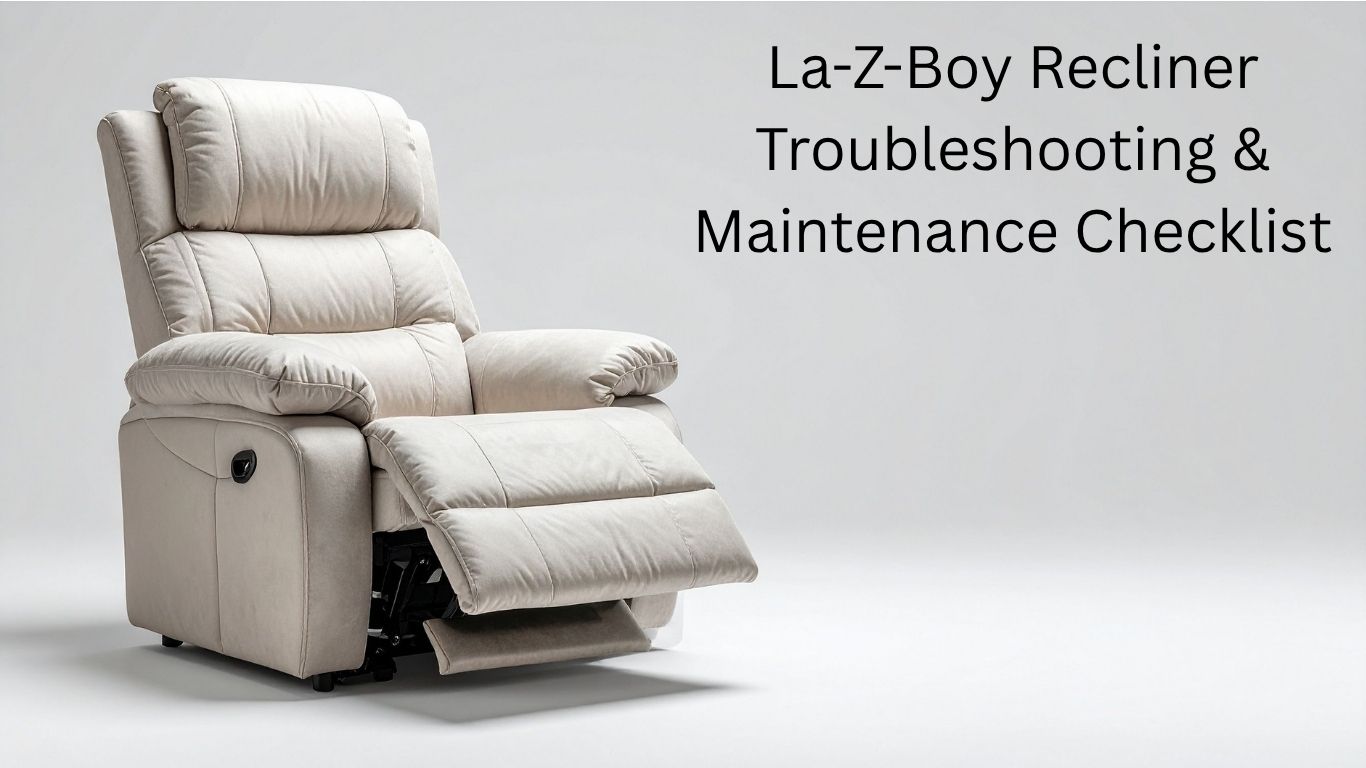
La-Z-Boy Recliner Troubleshooting & Maintenance Checklist: 15 Expert Fixes for a Longer-Lasting Chair
Key Takeaways
- Regular maintenance can significantly extend the lifespan of a La-Z-Boy recliner.
- Most common recliner issues start with loose hardware, lack of lubrication, worn cushions, or neglected moving parts.
- Monthly inspections help catch small problems before they become expensive repairs.
- Power recliners require additional electrical safety precautions during troubleshooting.
- Proper cleaning and upholstery care can keep your recliner looking new for years.
- A simple maintenance routine often prevents squeaks, sticking footrests, and reclining issues.
What Is the Best La-Z-Boy Recliner Maintenance Checklist?
The best La-Z-Boy recliner maintenance checklist includes inspecting hardware monthly, lubricating moving parts every few months, cleaning upholstery regularly, checking springs and frame components annually, and addressing unusual noises or movement immediately. Preventive maintenance helps avoid costly repairs, improves comfort, and extends the life of the recliner.
Introduction: Why Every La-Z-Boy Recliner Troubleshooting & Maintenance Checklist Starts With Prevention
A few years ago, I visited a friend who proudly owned a La-Z-Boy recliner that had been in his family room for nearly fifteen years.
The chair still looked great.
The fabric was clean.
The cushions felt comfortable.
But every time he reclined, it sounded like an old wooden ship sailing through a storm.
Creak.
Pop.
Squeak.
The noise was so dramatic that even the dog looked concerned.
The funny thing?
Nothing was actually broken.
The recliner simply hadn’t received any maintenance.
A little lubrication, a few tightened bolts, and some basic inspection work solved the problem.
That experience perfectly illustrates why preventive maintenance matters.
La-Z-Boy recliners are known for durability and comfort, but even the best furniture needs occasional attention.
The good news is that most maintenance tasks are simple, inexpensive, and easy for homeowners to perform.
This guide will help you identify problems early, keep your recliner operating smoothly, and avoid many of the costly repairs that develop from neglect.
Let’s begin by understanding what makes a La-Z-Boy recliner work.
Understanding How a La-Z-Boy Recliner Works
Before troubleshooting any problem, it helps to understand the major components involved.
Most people see a comfortable chair.
Underneath, there’s a surprisingly sophisticated system of moving parts.
The Main Components of a La-Z-Boy Recliner
Most La-Z-Boy recliners contain the following systems.
Frame
The frame serves as the foundation.
Depending on the model, it may include:
- Hardwood components
- Engineered wood
- Steel supports
A strong frame is essential for stability.
Reclining Mechanism
This is the system that allows the chair to move smoothly between positions.
The mechanism contains:
- Pivot points
- Linkages
- Springs
- Support arms
These components experience constant movement and wear.
Footrest Assembly
The footrest extends and retracts through a series of interconnected parts.
When functioning properly, movement should feel smooth and controlled.
Cushion System
The cushions provide:
- Comfort
- Weight distribution
- Posture support
Over time, cushions naturally compress.
Upholstery
Whether fabric or leather, the upholstery protects the internal components while contributing to comfort and appearance.
Manual vs Power La-Z-Boy Recliners
Not all recliners operate the same way.
Manual Recliners
Typically use:
- Side handles
- Pull levers
- Body weight
These systems contain fewer components and are generally easier to troubleshoot.
Power Recliners
Include:
- Electric motors
- Power supplies
- Control switches
- Wiring systems
While convenient, they require additional maintenance considerations.
Why Preventive Maintenance Matters
Think of your recliner like a car.
Waiting until something breaks usually costs more than routine maintenance.
Regular care helps:
- Prevent premature wear
- Reduce repair costs
- Maintain comfort
- Extend lifespan
A few minutes of maintenance every month can save hundreds of dollars later.
Essential Safety Precautions Before Troubleshooting
Before grabbing tools and crawling underneath your recliner, let’s discuss safety.
Trust me.
This section is worth reading.
I’ve seen more than one DIY repair project become unnecessarily complicated because someone skipped the basics.
Disconnect Power Recliners First
If your recliner uses electricity:
Always Unplug It
Before:
- Inspection
- Maintenance
- Repairs
This prevents accidental activation and reduces electrical risks.
Create a Safe Work Area
Choose a location with:
- Good lighting
- Adequate space
- Stable flooring
Avoid working in cramped areas.
A comfortable workspace improves both safety and efficiency.
Use Proper Protective Equipment
For most maintenance tasks, consider:
- Work gloves
- Safety glasses
Especially when inspecting springs or metal components.
Turn the Recliner Carefully
Many La-Z-Boy recliners are heavier than they appear.
Especially:
- Power models
- Lift chairs
- Oversized recliners
Ask for assistance when necessary.
There’s no award for lifting a recliner alone.
Keep Small Parts Organized
During inspections, use a container for:
- Screws
- Washers
- Bolts
- Clips
Few things are more frustrating than losing a tiny part halfway through a repair.
Know Your Limits
Some issues require professional attention.
Examples include:
- Electrical repairs
- Structural frame damage
- Major mechanism replacement
If a repair feels beyond your comfort level, it’s okay to call an expert.
Complete La-Z-Boy Recliner Maintenance Checklist
Now let’s discuss the maintenance routine that can prevent many common problems.
This is the checklist I wish every recliner owner followed.
Monthly Inspection Checklist
These tasks typically require less than fifteen minutes.
Check for Loose Hardware
Inspect:
- Bolts
- Screws
- Brackets
Tighten anything that appears loose.
Listen for New Noises
Pay attention to:
- Squeaks
- Creaks
- Clicking sounds
New noises often signal developing problems.
Test Reclining Motion
Ensure the recliner:
- Opens smoothly
- Closes smoothly
- Locks properly
Changes in movement often indicate wear.
Inspect the Upholstery
Look for:
- Loose stitching
- Tears
- Excessive wear
Early intervention can prevent larger issues.
Quarterly Maintenance Tasks
Every three months, perform a more detailed inspection.
Lubricate Moving Components
Focus on:
- Pivot points
- Hinges
- Linkages
Use an appropriate furniture-safe lubricant.
Inspect Springs
Look for:
- Damage
- Rust
- Loose attachments
Springs play a major role in comfort and support.
Clean Underneath the Recliner
Dust accumulation can interfere with moving parts.
Remove:
- Dust
- Pet hair
- Debris
from hidden areas.
Inspect the Footrest Assembly
Check for:
- Smooth operation
- Loose connections
- Unusual movement
Annual Deep Maintenance Review
At least once per year, perform a comprehensive evaluation.
Inspect the Frame
Look for:
- Cracks
- Warping
- Structural wear
Examine the Reclining Mechanism
Check:
- Wear points
- Linkages
- Moving joints
Evaluate Cushion Support
Ask:
- Has the foam compressed?
- Is support uneven?
- Has comfort declined?
Check Power Components
For electric models, inspect:
- Wiring
- Connections
- Power supply components
Signs Your Recliner Needs Immediate Attention
Some issues shouldn’t wait.
Address problems quickly if you notice:
Excessive Leaning
Could indicate:
- Frame damage
- Spring failure
- Base issues
Loud Mechanical Noises
New sounds often signal developing wear.
Difficulty Reclining
Resistance usually points to mechanical issues.
Wobbling
A stable recliner should not rock unexpectedly.
Electrical Problems
For power recliners:
- Intermittent operation
- Motor issues
- Unresponsive controls
should be addressed promptly.
Quick Maintenance Frequency Table
| Task | Frequency |
|---|---|
| Visual Inspection | Monthly |
| Tighten Hardware | Monthly |
| Upholstery Check | Monthly |
| Lubricate Moving Parts | Quarterly |
| Spring Inspection | Quarterly |
| Deep Cleaning | Quarterly |
| Frame Inspection | Annually |
| Mechanism Inspection | Annually |
| Electrical Inspection | Annually |
The Most Common Maintenance Mistake
If I had to identify the single biggest mistake recliner owners make, it would be this:
Waiting Until Something Breaks
Most repairs don’t happen because a recliner suddenly fails.
They happen because small warning signs were ignored.
Those warning signs often include:
- Minor squeaks
- Slight looseness
- Small movement changes
Addressing issues early is almost always cheaper and easier.
Troubleshooting Common La-Z-Boy Recliner Problems
Even with excellent maintenance, every recliner eventually develops a few quirks.
That’s normal.
A La-Z-Boy recliner contains dozens of moving parts that experience years of daily use.
If your recliner suddenly stops working properly, don’t assume the worst.
In many cases, the fix is surprisingly simple.
Let’s start with one of the most common complaints.
Troubleshooting a La-Z-Boy Recliner That Won’t Recline
Few things are more frustrating than settling into your favorite chair after a long day only to discover it refuses to recline.
Fortunately, the problem is often easy to identify.
Common Causes of Reclining Failure
Several components may be responsible.
Loose Hardware
Over time, bolts and brackets can loosen.
Even small amounts of movement can affect the reclining system.
Damaged Reclining Mechanism
Wear eventually affects moving parts.
Particularly on older recliners.
Broken Release Cable
Many manual recliners rely on a cable connected to the handle.
If the cable breaks, the recliner may stop responding.
Obstructions
Sometimes the issue isn’t mechanical at all.
Objects beneath the chair can interfere with movement.
I’ve personally found:
- Toys
- Pet accessories
- Remote controls
under recliners causing problems.
Step-by-Step Inspection Process
Step 1: Check for Obstructions
Look underneath the recliner.
Remove anything interfering with movement.
Step 2: Inspect the Handle
Verify that:
- The handle moves freely.
- The handle feels connected.
A loose handle often indicates a cable problem.
Step 3: Examine the Cable Assembly
Look for:
- Fraying
- Separation
- Disconnection
Damaged cables usually require replacement.
Step 4: Inspect the Mechanism
Check:
- Linkages
- Pivot points
- Brackets
Look for visible wear or damage.
When Replacement Is Necessary
If the reclining mechanism itself has failed, replacement may be the most practical solution.
Fortunately, La-Z-Boy replacement parts are often available for many models.
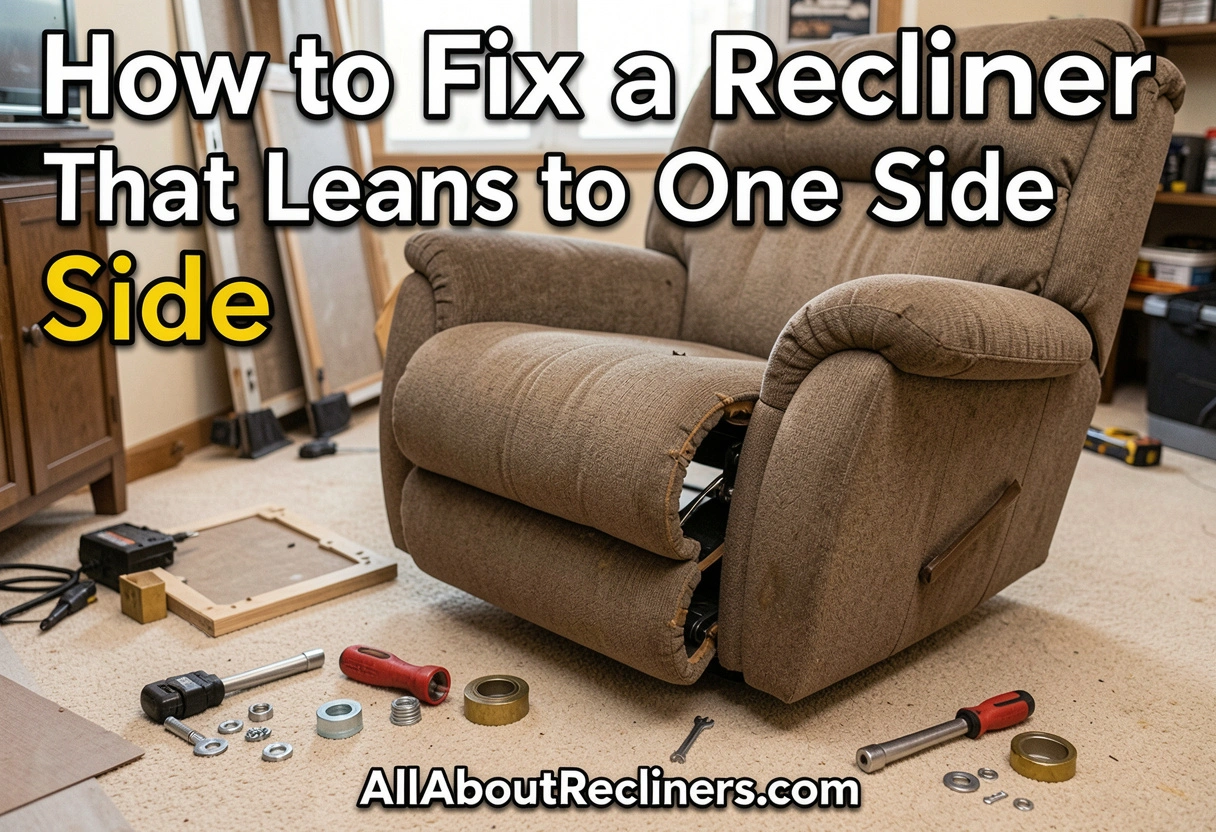
How to Fix a La-Z-Boy Recliner That Leans to One Side
A leaning recliner can make you feel like you’re sitting on a hillside.
And unfortunately, the problem usually gets worse over time.
Common Causes of Recliner Leaning
Several issues may contribute.
Loose Frame Hardware
One of the most common causes.
Worn Springs
Support springs may weaken unevenly.
Cushion Compression
Sometimes the chair isn’t leaning.
The cushion is.
Uneven Flooring
Never overlook the floor itself.
Inspecting the Recliner Base
Begin by placing the recliner on a known level surface.
Then inspect:
- Feet
- Base supports
- Frame connections
A missing foot or damaged support can create a noticeable lean.
Checking Springs and Support Components
Look for:
- Broken springs
- Detached springs
- Bent support components
Compare both sides carefully.
Evaluating Cushion Support
Sit in different positions.
Ask yourself:
- Does one side feel softer?
- Does one side sink more?
Compressed foam often creates the illusion of structural problems.
Quick Leaning Recliner Checklist
| Potential Cause | Recommended Action |
|---|---|
| Loose bolts | Tighten hardware |
| Broken spring | Replace spring |
| Damaged foot | Replace foot |
| Cushion compression | Replace foam |
| Uneven floor | Use furniture shims |
Troubleshooting a Stuck La-Z-Boy Footrest
A footrest that refuses to cooperate can quickly ruin the recliner experience.
Why Footrests Become Stuck
Common reasons include:
- Dirt buildup
- Worn springs
- Bent linkages
- Lack of lubrication
Inspect the Release Mechanism
Begin by operating the footrest slowly.
Watch for:
- Delayed movement
- Binding
- Resistance
The point where movement stops often reveals the problem.
Check the Linkages
Inspect:
- Connecting arms
- Pivot joints
- Support brackets
Look for:
- Bends
- Cracks
- Misalignment
Lubricate Moving Components
Many footrest issues result from dry joints.
Apply a suitable lubricant to:
- Hinges
- Pivot points
- Moving connections
Avoid excessive application.
A little goes a long way.
Inspect the Springs
Footrest systems often rely on spring tension.
Look for:
- Stretching
- Breakage
- Detachment
A failed spring may prevent proper operation.
When Parts Need Replacement
Replacement may be required if you find:
- Broken linkages
- Damaged springs
- Severely worn components
Always match replacement parts carefully.
How to Fix a Squeaky La-Z-Boy Recliner
If your recliner sounds like it’s auditioning for a haunted house movie, you’re not alone.
Squeaks are among the most common complaints.
The good news?
They’re often among the easiest problems to solve.
Common Sources of Recliner Squeaks
Most squeaks originate from:
Metal-to-Metal Contact
Moving parts naturally create friction.
Dry Pivot Points
Lack of lubrication is a frequent culprit.
Loose Hardware
Small movements can create surprising amounts of noise.
Worn Components
Older recliners may develop wear-related sounds.
Finding the Source of the Noise
This requires a little detective work.
Method
- Recline slowly.
- Listen carefully.
- Identify when the sound occurs.
- Observe moving components.
Pinpointing the source makes repairs easier.
Lubricating the Mechanism
Focus on:
- Hinges
- Pivot joints
- Moving arms
Use a lubricant designed for metal moving parts.
Avoid spraying upholstery.
Trust me.
It’s easier than explaining mysterious stains later.
Tighten Loose Hardware
Even slightly loose bolts can create:
- Clicking
- Popping
- Squeaking
Inspect all accessible fasteners.
Inspect for Worn Components
If lubrication doesn’t solve the problem, look for:
- Worn bushings
- Damaged pivots
- Excessive play
These components may require replacement.
Quick Noise Troubleshooting Table
| Sound | Likely Cause |
|---|---|
| Squeak | Dry pivot point |
| Click | Loose hardware |
| Pop | Worn component |
| Grinding | Misalignment |
| Creak | Frame or joint movement |
The Fastest Troubleshooting Win
If there’s one maintenance task that solves more recliner problems than people realize, it’s this:
Tighten and Lubricate
Seriously.
Many issues involve:
- Loose fasteners
- Dry joints
A simple inspection and lubrication session often restores smooth operation.
When to Stop Troubleshooting
Most problems discussed so far are DIY-friendly.
However, seek professional assistance if you discover:
- Structural frame damage
- Broken welds
- Severe mechanism failure
- Electrical hazards
Safety should always come first.
Power Recliner Problems, Recliners That Won’t Close, Wobbling Issues, and Cushion Maintenance
If you’ve ever owned a power recliner, you already know the tradeoff.
You gain convenience.
But you also gain a few extra components that can occasionally decide to misbehave.
Fortunately, most power recliner issues are easier to diagnose than people think.
Let’s start with one of the most common concerns.
Troubleshooting Power La-Z-Boy Recliners
Power recliners add motors, wiring, transformers, and control switches to the traditional reclining system.
That sounds complicated.
Thankfully, many issues can be identified with a simple process.
Power Recliner Not Responding
If you press the button and absolutely nothing happens, start with the basics.
Check the Power Source
Verify:
- The outlet works
- The power cord is connected
- Extension cords aren’t causing problems
You’d be surprised how many “broken” recliners are simply unplugged.
I’ve made that mistake myself.
More than once.
Inspect the Power Connections
Look for:
- Loose plugs
- Damaged connectors
- Pinched wires
Pay particular attention to connections beneath the chair.
Movement can occasionally loosen them over time.
Check the Transformer
Most power recliners include a transformer.
Inspect it for:
- Indicator lights
- Loose connections
- Physical damage
If the transformer fails, the recliner won’t receive power.
Test the Control Switch
Sometimes the motor is fine.
The switch is the problem.
Symptoms may include:
- Intermittent operation
- Delayed response
- One-direction movement only
These often point toward switch-related issues.
Listen for Motor Activity
When pressing the control button:
If You Hear the Motor
The problem may involve:
- Linkages
- Mechanisms
- Alignment
If You Hear Nothing
Focus on:
- Electrical components
- Wiring
- Power supply
Resetting a Power Recliner
Some issues can be resolved by:
- Unplugging the recliner.
- Waiting several minutes.
- Reconnecting power.
- Testing operation again.
Simple, but occasionally effective.
How to Fix a La-Z-Boy Recliner That Won’t Close Properly
A footrest that refuses to fully close can be frustrating.
Especially when you’re trying to leave the room and the recliner insists on staying partially open.
Common Causes
Several factors may contribute.
Misaligned Linkages
Movement over time can shift components slightly.
Weak Springs
Spring tension helps certain mechanisms return to their proper position.
Obstructions
Dust, debris, or foreign objects can interfere with movement.
Worn Components
Older recliners naturally experience wear.
Inspect the Linkage System
Turn the recliner over and observe the moving parts.
Look for:
- Bent arms
- Misalignment
- Damaged brackets
Small distortions can affect operation.
Check Spring Tension
Inspect springs for:
- Stretching
- Breakage
- Detachment
Weak springs may not provide sufficient return force.
Lubricate Moving Parts
Dry components can create resistance.
Apply lubricant to:
- Hinges
- Pivots
- Sliding joints
Operate the chair several times afterward.
Test the Recliner Again
After adjustments:
- Fully recline.
- Return to upright.
- Observe movement carefully.
Smooth operation usually indicates success.
Troubleshooting Loose or Wobbly Recliners
A wobbling recliner often feels much worse than it actually is.
In many cases, the fix is surprisingly simple.
Why Recliners Become Wobbly
Common causes include:
- Loose hardware
- Damaged feet
- Uneven floors
- Frame movement
Inspect All Hardware
This should always be your first step.
Check:
- Bolts
- Screws
- Brackets
- Supports
Tighten anything loose.
Examine the Recliner Feet
Look for:
- Cracks
- Missing pieces
- Uneven wear
Even one damaged foot can create instability.
Test the Floor
Move the recliner to another location.
If the wobble disappears:
The floor may be responsible.
Not the chair.
Inspect the Base Structure
Look for:
- Cracks
- Frame separation
- Loose supports
Structural issues require prompt attention.
Quick Wobble Diagnosis Table
| Symptom | Likely Cause |
|---|---|
| Slight rocking | Loose hardware |
| Leaning and wobbling | Base issue |
| Wobble only in one room | Uneven flooring |
| Movement when reclining | Mechanism looseness |
Recliner Cushion Maintenance and Care
Let’s talk about comfort.
Because even a perfectly functioning recliner won’t feel right if the cushions have lost support.
Why Recliner Cushions Wear Out
Foam naturally compresses over time.
Factors include:
- Daily use
- User weight
- Foam quality
- Recliner age
Eventually, every cushion begins to show signs of wear.
Signs Your Cushions Need Attention
Look for:
- Visible sagging
- Uneven support
- Loss of firmness
- Permanent indentations
These symptoms usually develop gradually.
Fluffing and Rotating Cushions
If your model allows removable cushions:
Rotate them periodically.
Benefits include:
- More even wear
- Better support
- Extended lifespan
Not all models offer this option, but it’s worth checking.
Using Cushion Support Inserts
For mild sagging:
Support inserts may help restore comfort.
They can:
- Improve seating posture
- Reduce sinking
- Extend cushion life
Replacing Foam Inserts
Sometimes replacement becomes the best solution.
New foam can dramatically improve:
- Comfort
- Appearance
- Support
I’ve seen older recliners feel almost new again after a quality foam replacement.
Protecting Cushions From Premature Wear
Simple habits help.
Avoid Consistently Sitting in One Spot
Most people have a favorite side.
Try varying your position occasionally.
Maintain Proper Weight Distribution
Avoid sitting heavily on:
- Armrests
- Footrests
These components aren’t designed for concentrated weight.
Clean Cushions Regularly
Dust and debris can gradually affect upholstery and comfort.
Monthly Cushion Inspection Checklist
Use this quick checklist:
Check for:
- Sagging
- Flattening
- Uneven support
- Loose upholstery
- Cushion shifting
Early detection helps prevent larger issues.
One of the Most Overlooked Maintenance Tasks
If I had to choose one commonly ignored task, it would be:
Cleaning Under the Recliner
Most homeowners clean around the chair.
Very few clean underneath it.
Yet that’s where:
- Dust
- Pet hair
- Debris
often accumulate.
Over time, buildup can affect moving parts.
A quick vacuum every few months can make a surprising difference.
The Secret to Long-Term Recliner Comfort
Many people assume comfort depends entirely on the original design.
Not quite.
Comfort depends heavily on maintenance.
A well-maintained ten-year-old La-Z-Boy often feels better than a neglected three-year-old recliner.
Consistency matters.
Upholstery Care, Cleaning, Spring Maintenance, Frame Inspection, and Long-Term Protection
At this point, we’ve covered many of the mechanical issues that affect La-Z-Boy recliners.
Now let’s focus on something equally important:
Preserving the chair itself.
Because even if the mechanism works perfectly, a recliner that looks worn out, feels dirty, or has sagging support won’t provide the experience you paid for.
The good news?
Most upholstery and structural maintenance is simple when performed regularly.
Upholstery Maintenance Checklist
Your recliner’s upholstery is its first line of defense against daily life.
And daily life can be surprisingly rough on furniture.
Coffee spills.
Pet hair.
Sunlight.
Kids.
Mystery stains that somehow appear overnight.
Regular care helps prevent permanent damage.
Caring for Fabric La-Z-Boy Recliners
Fabric recliners require consistent cleaning to maintain appearance and durability.
Weekly Tasks
- Vacuum cushions
- Remove dust
- Clean crevices
- Check for stains
A handheld vacuum works particularly well.
Spot Cleaning Fabric Upholstery
When spills occur:
Act Quickly
The longer a stain sits, the harder it becomes to remove.
Blot, Don’t Rub
Rubbing often spreads stains deeper into fibers.
Use Manufacturer-Approved Cleaners
Always test products on an inconspicuous area first.
Caring for Leather La-Z-Boy Recliners
Leather requires a slightly different approach.
Regular Maintenance
- Dust weekly
- Wipe with a soft cloth
- Remove spills immediately
Condition Leather Periodically
Conditioners help prevent:
- Dryness
- Cracking
- Premature aging
Think of leather conditioning like moisturizing your skin.
Neglect eventually shows.
Protecting Upholstery From Sun Damage
Direct sunlight can cause:
- Fading
- Drying
- Material deterioration
Whenever possible:
- Keep recliners away from intense sunlight.
- Use curtains or blinds.
- Rotate furniture placement occasionally.
Cleaning Your La-Z-Boy Recliner the Right Way
Cleaning isn’t just about appearance.
It also protects moving components and upholstery materials.
Weekly Cleaning Routine
A simple weekly routine can make a significant difference.
Step 1
Vacuum upholstery thoroughly.
Step 2
Clean armrests and headrests.
Step 3
Inspect seams and stitching.
Step 4
Remove debris from beneath the recliner.
This entire process typically takes less than fifteen minutes.
Monthly Deep Cleaning
A deeper cleaning should include:
- Detailed upholstery care
- Crevice cleaning
- Mechanism inspection
- Dust removal underneath
Hard-to-Reach Areas
Pay special attention to:
- Under cushions
- Between seat sections
- Beneath the footrest
These areas often collect surprising amounts of debris.
Cleaning Products to Avoid
Avoid harsh chemicals such as:
- Bleach
- Ammonia-based cleaners
- Abrasive scrubbers
These products may damage upholstery and finishes.
Inspecting and Maintaining Recliner Springs
Springs play a critical role in comfort and support.
When springs fail, the difference is immediately noticeable.
Why Springs Matter
Springs help:
- Distribute weight
- Support cushions
- Maintain comfort
Without proper spring support, even premium cushions can feel inadequate.
Signs of Spring Problems
Watch for:
- Sinking
- Uneven seating
- Noises
- Reduced support
These symptoms often indicate spring wear.
How to Inspect Springs
Turn the recliner over and inspect:
- Attachments
- Tension
- Rust
- Alignment
Compare both sides whenever possible.
Reattaching Loose Springs
Sometimes springs simply become disconnected.
Inspect:
- Clips
- Brackets
- Mounting points
Replace damaged connectors as needed.
Replacing Broken Springs
If a spring is broken:
- Measure carefully.
- Purchase a matching replacement.
- Follow manufacturer specifications.
Incorrect spring sizes may affect comfort and operation.
Maintaining the Recliner Frame
The frame is the backbone of the recliner.
Everything else depends on it.
Wooden Frame Inspection Checklist
Look for:
- Cracks
- Splits
- Loose joints
- Warping
Even minor damage should be monitored.
Metal Frame Inspection Checklist
Inspect for:
- Bends
- Cracks
- Corrosion
- Broken welds
Metal frames are durable but not indestructible.
Signs of Structural Damage
Watch for:
- Excessive leaning
- Wobbling
- Misalignment
- Unusual movement
These symptoms may indicate frame issues.
Reinforcing Weak Areas
Minor weaknesses can sometimes be strengthened using:
- Brackets
- Additional fasteners
- Reinforcement plates
Major structural repairs often require professional assistance.
Preventive Maintenance Tips to Extend Recliner Life
This section contains the habits that separate recliners that last five years from those that last fifteen.
Respect the Weight Limit
Every recliner has design limitations.
Exceeding weight capacity increases stress on:
- Springs
- Frames
- Mechanisms
Always follow manufacturer recommendations.
Avoid Using the Footrest as a Step
This happens more often than manufacturers would like.
The footrest is designed to support legs.
Not full body weight.
Standing on it can damage:
- Linkages
- Brackets
- Supports
Recline Smoothly
Forcing the mechanism creates unnecessary wear.
Allow components to move naturally.
Keep Pets From Sleeping Under the Recliner
I’ve seen more than one repair complicated by:
- Pet toys
- Blankets
- Chew toys
lodged in the mechanism.
A quick inspection prevents surprises.
Lubricate Moving Parts Consistently
Most squeaks and minor movement issues begin with friction.
Regular lubrication helps reduce wear.
Address Small Problems Immediately
This is perhaps the most valuable maintenance tip in the entire guide.
A minor issue today may become a major repair tomorrow.
Recommended Annual Maintenance Checklist
| Task | Recommended Frequency |
|---|---|
| Vacuum Upholstery | Weekly |
| Spot Clean Stains | As Needed |
| Hardware Inspection | Monthly |
| Lubricate Mechanism | Every 3–6 Months |
| Spring Inspection | Quarterly |
| Cushion Evaluation | Quarterly |
| Deep Cleaning | Quarterly |
| Frame Inspection | Annually |
| Electrical Inspection | Annually |
How Maintenance Saves Money
Let’s put things into perspective.
Consider two recliner owners.
Owner A
- Performs regular inspections
- Lubricates components
- Cleans consistently
Owner B
- Ignores maintenance completely
Five years later:
Owner A likely faces minimal repair costs.
Owner B often faces:
- Spring replacement
- Mechanism repairs
- Upholstery deterioration
Maintenance isn’t exciting.
But it works.
The Habit That Extends Recliner Life the Most
If I had to recommend just one habit, it would be:
Monthly Inspections
Why?
Because inspections identify:
- Loose bolts
- Worn components
- Developing problems
before they become expensive.
Ten minutes per month can save hundreds of dollars over time.
Quick Fixes, Repair Decisions, Lifespan Expectations, FAQs, and Final Thoughts
You’ve made it to the final section of this complete La-Z-Boy recliner troubleshooting and maintenance guide.
By now, you know how to:
- Inspect your recliner
- Maintain moving parts
- Troubleshoot common issues
- Protect upholstery
- Extend the lifespan of your chair
Now let’s bring everything together with quick-reference solutions, repair guidance, and answers to the most common questions owners ask.
Common La-Z-Boy Recliner Problems and Quick Fixes
Sometimes you don’t want a long explanation.
You simply want a fast answer.
This section is designed for exactly that.
Recliner Won’t Recline
Possible Causes
- Loose handle
- Broken cable
- Obstructed mechanism
- Worn linkage
Quick Fix
- Inspect the handle.
- Check the cable connection.
- Remove debris.
- Lubricate moving components.
Recliner Won’t Close
Possible Causes
- Weak spring
- Bent linkage
- Dry pivot points
Quick Fix
- Inspect springs.
- Lubricate joints.
- Check alignment.
Recliner Squeaks
Possible Causes
- Friction
- Loose hardware
- Dry pivots
Quick Fix
- Tighten fasteners.
- Apply lubricant.
- Inspect moving parts.
Recliner Leans to One Side
Possible Causes
- Broken spring
- Loose frame connection
- Cushion compression
Quick Fix
- Inspect support system.
- Tighten hardware.
- Check cushions.
Power Recliner Stops Working
Possible Causes
- Power supply issue
- Loose connection
- Faulty switch
Quick Fix
- Verify power.
- Check wiring.
- Reset the recliner.
Footrest Won’t Lock
Possible Causes
- Worn linkage
- Damaged spring
- Alignment issue
Quick Fix
- Inspect mechanism.
- Replace damaged parts.
- Lubricate moving joints.
Quick Troubleshooting Reference Table
| Problem | Most Likely Cause | First Thing to Check |
|---|---|---|
| Won’t Recline | Cable or mechanism | Handle assembly |
| Won’t Close | Springs or linkage | Footrest assembly |
| Squeaks | Friction | Pivot points |
| Leans | Springs or frame | Support system |
| Wobbles | Loose hardware | Bolts and brackets |
| No Power | Electrical issue | Power source |
| Uneven Support | Cushion wear | Foam condition |
DIY Repairs vs Professional Repairs
One of the most common questions I hear is:
“Should I fix it myself or call someone?”
The answer depends on the problem.
Repairs Most Homeowners Can Handle
These are generally DIY-friendly.
Examples
- Tightening bolts
- Lubricating components
- Cleaning mechanisms
- Replacing simple springs
- Replacing handles
- Reattaching cables
Most require only basic tools.
Repairs That May Need a Professional
Some repairs involve greater complexity.
Examples
- Structural frame damage
- Broken welds
- Motor replacement
- Electrical diagnostics
- Major mechanism replacement
If safety is involved, professional assistance is often worthwhile.
Questions to Ask Before Attempting a Repair
Consider:
- Do I have the necessary tools?
- Am I comfortable with the repair?
- Could a mistake create a safety issue?
- Is the recliner still under warranty?
These questions help guide the decision.
Understanding Warranty Coverage
Many La-Z-Boy owners overlook warranty protection.
Before purchasing parts, check:
- Original documentation
- Manufacturer support information
- Warranty status
Coverage may apply to:
- Mechanisms
- Frames
- Springs
- Electrical components
A quick check could save significant money.
How Long Should a La-Z-Boy Recliner Last?
This is one of the biggest reasons people choose La-Z-Boy in the first place.
They have a reputation for durability.
Average Lifespan Expectations
With proper maintenance, many La-Z-Boy recliners last:
Typical Range
10–20 years
Some exceed this range.
Especially when maintenance is consistent.
Factors That Affect Lifespan
Several variables influence longevity.
Frequency of Use
Daily use increases wear.
User Weight
Higher loads place greater stress on components.
Maintenance Habits
Regular care extends lifespan significantly.
Recliner Model
Build quality varies between models.
Signs Your Recliner Is Nearing End of Life
Watch for:
- Repeated repairs
- Severe cushion deterioration
- Structural damage
- Multiple component failures
These signs suggest replacement may be approaching.
When Replacement Makes More Sense Than Repair
I love repairing furniture.
But sometimes replacement is the smarter financial decision.
Consider Replacement When
Multiple Major Components Fail
For example:
- Springs
- Mechanism
- Frame
all requiring repair simultaneously.
Repair Costs Exceed Value
Sometimes repair estimates approach the cost of a new recliner.
Comfort Has Significantly Declined
Even after repairs.
At that point, replacement may offer greater value.
Seasonal La-Z-Boy Maintenance Schedule
A seasonal approach helps ensure nothing gets overlooked.
Spring Checklist
Perfect time for:
- Deep cleaning
- Hardware inspection
- Lubrication
Summer Checklist
Focus on:
- Sunlight protection
- Upholstery care
- Leather conditioning
Fall Checklist
Inspect:
- Mechanisms
- Springs
- Cushion support
Prepare for increased indoor use.
Winter Checklist
Check:
- Power cords
- Electrical connections
- Upholstery dryness
Heating systems can affect materials.
Quick Annual Maintenance Calendar
| Season | Primary Focus |
|---|---|
| Spring | Cleaning and inspection |
| Summer | Upholstery protection |
| Fall | Mechanical inspection |
| Winter | Electrical and material care |
Frequently Asked Questions
Common causes include:
Broken cable
Loose handle
Obstructed mechanism
Worn components
A thorough inspection usually identifies the issue.
Begin by checking:
Springs
Linkages
Pivot points
Lubrication often helps resolve minor sticking.
Most squeaks come from:
Dry moving parts
Loose hardware
Friction points
Lubrication and tightening usually solve the problem.
Many minor repairs are DIY-friendly.
Major mechanism replacements may require professional assistance.
Every three to six months is a good rule for most households.
Heavy use may require more frequent attention.
Most quality models last between 10 and 20 years with proper care.
Often, yes.
Especially if:
The frame remains solid
Repairs are minor
Comfort is still good
Summary
A La-Z-Boy recliner is an investment in comfort.
Like any investment, it performs best when properly maintained.
Focus on Preventive Care
Regular inspections help identify issues early.
Keep Moving Parts Maintained
Lubrication reduces wear and prevents many common problems.
Protect Upholstery
Cleaning and conditioning help preserve appearance and durability.
Address Problems Quickly
Small issues rarely improve on their own.
Follow a Maintenance Schedule
Consistency is the secret to long-term reliability.
Final Thoughts
Over the years, I’ve worked on recliners that looked completely worn out but still had years of life remaining.
I’ve also seen relatively new recliners develop major problems simply because nobody paid attention to the warning signs.
The difference usually comes down to maintenance.
A few minutes every month can dramatically extend the life of your La-Z-Boy.
And honestly, that’s a pretty good trade.
After all, your recliner is often:
- The best seat in the house
- The place where movie nights happen
- The chair you fall asleep in even when you promised yourself you wouldn’t
Taking care of it just makes sense.
Disclaimer
This article is intended for informational and educational purposes only. La-Z-Boy recliner designs vary by model and year. Always follow the manufacturer’s instructions and safety recommendations when performing maintenance or repairs. If you encounter electrical issues, structural damage, or safety concerns, consult a qualified furniture repair professional.